
Arrest Record vs Court Record in Albany County
An arrest record is a snapshot of a booking event. A court record is the case file the case becomes after the arrest. The two are not the same thing. A person can be arrested and never charged. A person can be arrested and have the case dismissed. A person can be arrested and end up with a sealed file under CPL § 160.50. A separate, broader criminal history is held by the New York Division of Criminal Justice Services, not by Albany County.
Arrest vs Court vs Criminal History. An arrest log shows what police booked. A court docket shows what the prosecutor filed and how the case ended. A DCJS criminal history shows lifetime arrests and dispositions. Each source has different fees, different access rules, and different sealing treatment.
How to Find Recent Albany County Arrests
Albany County does not publish a fully open jail roster in the official sources reviewed. That means the path to confirm a recent arrest runs through several offices, not one search box. The most reliable steps are listed below.
- Call the Albany County Sheriff's Office or the police agency that made the arrest. Booking confirmation usually happens within hours.
- Check WebCrims for the next scheduled appearance. New arraignments often show up within one to two business days.
- Register on VINELink for custody-notification updates if the person is in county custody.
- If a person was held overnight, expect arraignment in Albany City Court for city arrests or in the relevant town or village justice court for arrests outside the city.
- Felony arrests routinely move from local arraignment to Albany County Court after indictment or superior-court information.
Inmate-search detail and visitation rules live on the Albany County inmate records page.
Where Albany County Arrests Go in Court
The court an arrest lands in depends on the charge and the location. A misdemeanor inside the City of Albany usually goes to Albany City Court. A misdemeanor in Colonie, Guilderland, Bethlehem, Cohoes, Watervliet, Green Island, or another town or village goes to that municipality's justice court. A felony arrest may start in any local arraignment court and then move to Albany County Court after grand-jury action.
The People are represented by the Albany County District Attorney. Eligible indigent defendants are represented by the Albany County Public Defender's Office or assigned counsel. WebCrims tracks public criminal appearances. Sealed cases and youthful offender cases do not appear.
The arraignment court is the first stop. There a judge sets release conditions under New York bail law, advises the defendant of the charges, and assigns counsel if requested. New York's bail and discovery reforms continue to shape how arraignment plays out, so the practical timing in Albany County may differ from what it looked like five years ago. Counsel can answer current practice questions far better than any portal.
What Is in an Albany County Booking Record
A booking record at the Albany County Correctional Facility or the arresting agency captures the inputs from intake. The exact fields vary, but the categories below are typical of New York booking records.
- Full legal name, aliases, and identifying numbers.
- Booking date, time, and arresting agency.
- Charges as written by the arresting officer.
- Property inventory, photographs, and fingerprints.
- Medical screening and classification notes (not public).
- Bail amount and release conditions as set by the arraignment court.
Public-facing booking information is limited. Medical, classification, and housing details are not released to the general public. A request for a booking-related document should go to the arresting agency or the Albany County Sheriff's Office.
Charges, Pleas, and Convictions in Albany County
The charge listed at booking is not the charge a defendant is convicted of. New York prosecutors regularly reduce charges as part of plea bargains. A felony arrest can become a misdemeanor plea. A misdemeanor arrest can become a violation. A violation can become an adjournment in contemplation of dismissal. Each step is recorded on the court docket, not on the arrest log.
Charges vs Convictions. The charge entry on a booking sheet shows what police suspected. The conviction entry on a court disposition shows what the case ended in. Use the disposition for employment, immigration, and licensing questions, not the booking sheet.
Sealing of Albany County Criminal Records
New York is a sealing state more than an expungement state. Eligible records are hidden from ordinary public view, not destroyed. Several statutes drive the process. CPL § 160.50 seals records after a criminal action ends in favor of the accused. CPL § 160.55 applies after certain convictions are replaced by noncriminal dispositions. CPL § 160.59 allows application-based sealing of eligible older convictions. CPL § 720.35 keeps youthful offender records confidential.
Marijuana-related convictions have their own sealing path under CPL § 160.57. The statute applies to certain pre-reform marijuana cases.
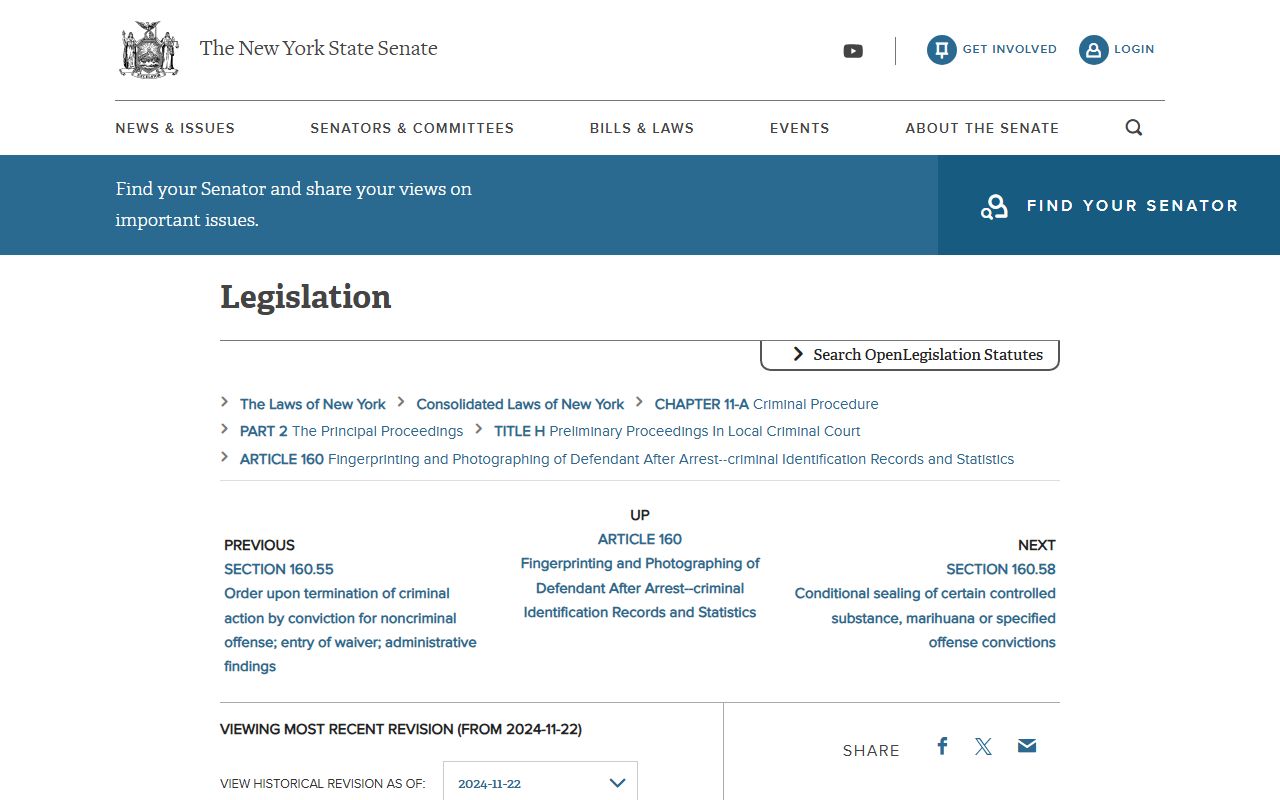
The marijuana sealing statute is the reason many older marijuana arrests no longer appear in WebCrims or background searches.
| Sealing Path | Statute | Who Can Use It |
|---|---|---|
| Sealing after favorable termination | CPL 160.50 | Anyone whose case ended in dismissal, acquittal, or other favorable termination. |
| Sealing after reduction | CPL 160.55 | Cases that ended in certain noncriminal dispositions. |
| Marijuana sealing | CPL 160.57 | People with certain pre-reform marijuana convictions. |
| Application-based sealing | CPL 160.59 | People with eligible older convictions who meet the waiting period and offense limits. |
| Youthful offender | CPL 720.35 | Adjudicated youthful offenders. |
Sex Offender Registry and Albany County
New York's sex offender registry is a separate system from any arrest record. The registry is created under Correction Law Article 6-B, which sets the framework for registration, risk levels, and public access. The registry shows name, aliases, risk level, offense data, and address information where the statute allows. It is not a complete criminal-history report. Use it for what the law publishes, not as a stand-in for a full background check.
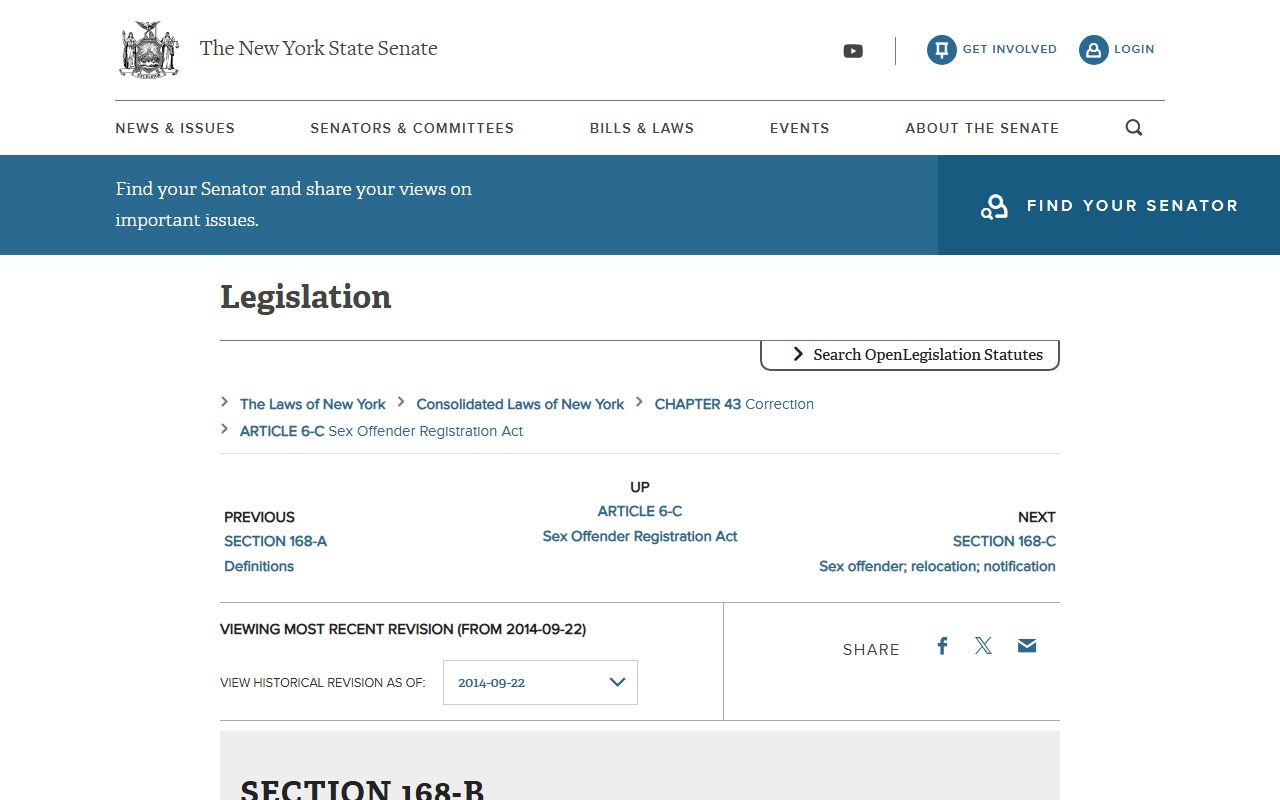
The statute drives what the New York Division of Criminal Justice Services publishes on the public registry search.
Federal Arrests Involving Albany County Residents
Some Albany County arrests are federal cases. The U.S. Attorney's Office for the Northern District of New York prosecutes federal crimes in the Albany region. Federal arrests do not produce a state court docket. They produce a federal docket through the Northern District of New York.
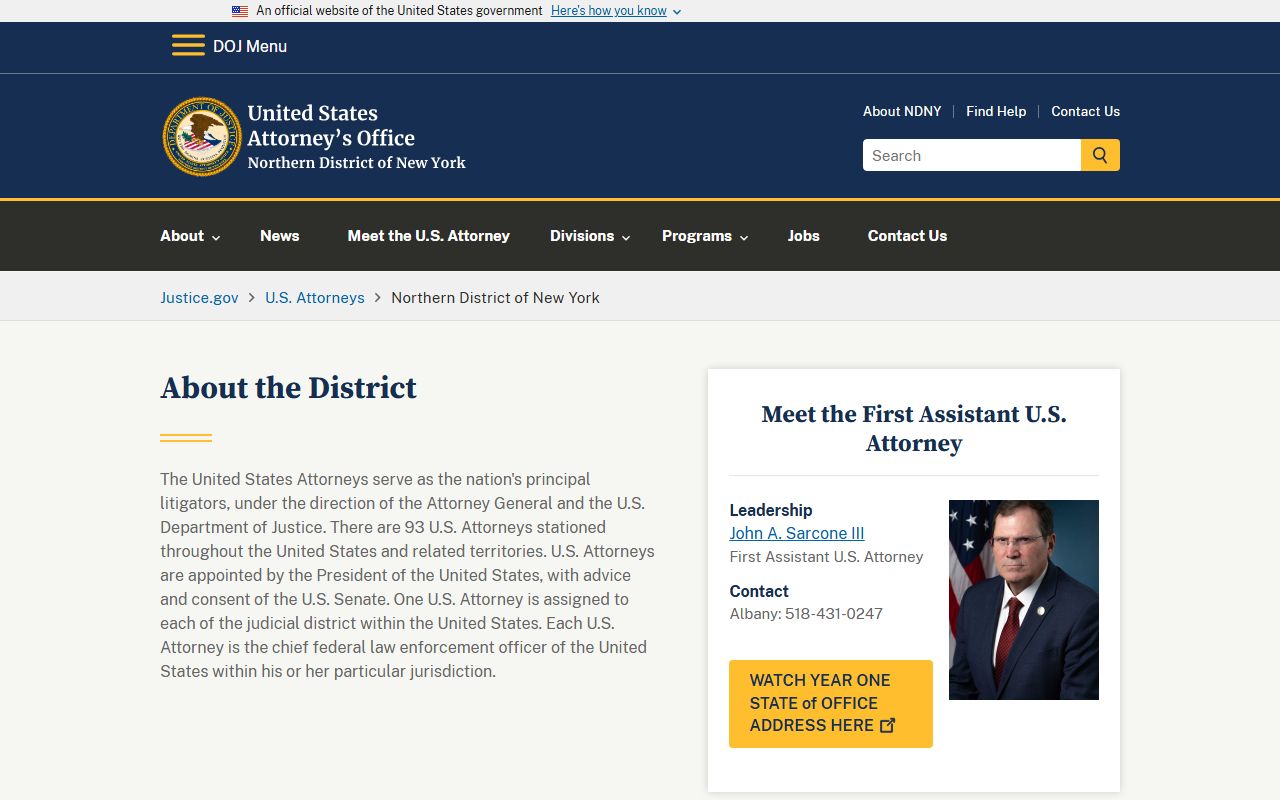
The U.S. Attorney's office handles federal criminal prosecutions for Albany County and the rest of the Northern District.
Federal opinions and certain federal docket information are also searchable for free on third-party legal databases. CourtListener publishes opinions, oral-argument audio, and select docket entries from federal courts. It is not the official docket and not a substitute for PACER for live filings, but it is useful for older opinions.
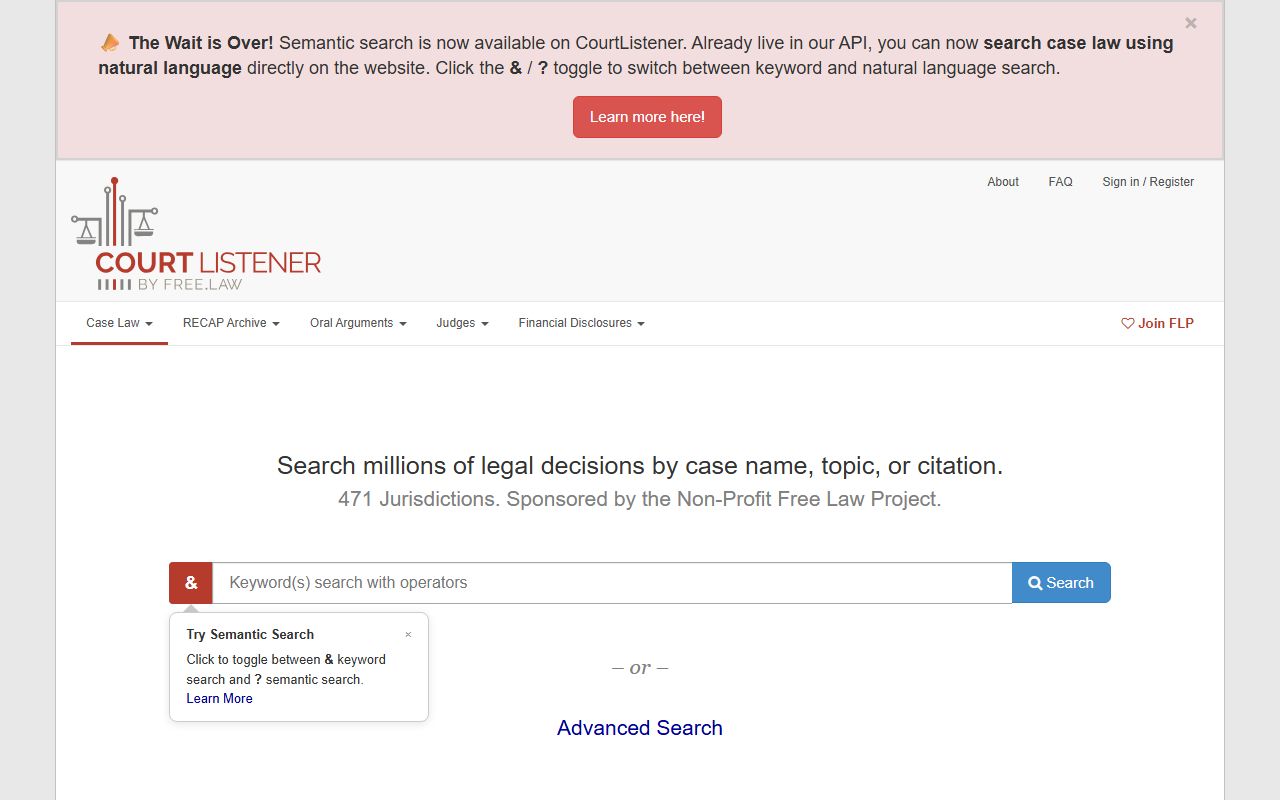
CourtListener can fill in older federal opinions when a researcher does not need the latest live docket entries.
Sealed vs Expunged in New York
Many users use "sealed" and "expunged" as if they mean the same thing. They do not. New York seals most eligible records. It rarely expunges them.
| Topic | Sealed | Expunged |
|---|---|---|
| Public access | Hidden from ordinary public search | Treated as if it never existed for most purposes |
| Law enforcement access | Authorized agencies still have access | Limited or none, depending on statute |
| Common New York use | CPL 160.50, 160.55, 160.57, 160.59 | Rare; not the default New York remedy |
| Effect on background checks | Should not appear; some leakage is possible | Should not appear |
Note: Sealed records can still appear in licensing, immigration, and law-enforcement screening; sealing is not the same as a clean record everywhere.
Certificates of Disposition in Albany County
A certificate of disposition is the court's official summary of how a case ended. Employers, licensing bodies, and immigration officials often ask for one. The certificate comes from the court clerk that handled the case, not from the police.
The request usually needs the defendant's name, the docket or index number, the court, the year, and a small fee. The Albany County Clerk can help locate the right clerk window for Supreme and County Court cases. Albany City Court issues certificates for City Court matters. Town and village courts issue their own.
Arrest Records and Background Checks
An arrest record is not a background check, and the two should not be confused. A formal background check pulls a criminal-history report, often from the New York Division of Criminal Justice Services rather than from any single Albany County office. An arrest log only shows that police booked someone. It does not show how the case ended.
That gap matters for employment, housing, and licensing decisions. New York's sealing rules mean many arrests that ended favorably should not appear on a proper background check, even if an old news story or a third-party site still lists them. For decisions with legal consequences, the certified disposition from the court is the document that counts, not an arrest log or a commercial data report.
Note: Using an arrest record for hiring or tenant screening can run into the federal Fair Credit Reporting Act and New York's own employment-screening rules.